 Olivia BennettVIEW PROFILE →
OLIX Triples Its Valuation to $3.3bn: the Two-Year-Old British Chip Startup Taking On Nvidia
OLIX, a UK AI-chip startup founded in 2024, has raised a $312 million Series B at a $3.3 billion valuation, backed by Arm, Hudson River Trading, Netflix's Reed Hastings and the UK government's Sovereign AI fund. Its bet: purpose-built inference chips wired together by light.
A two-year-old British chip startup has just become one of the UK's most valuable young technology companies. OLIX, founded in 2024, has raised a $312 million Series B funding round at a $3.3 billion valuation, cementing its position as one of the boldest bets in Europe's push to build homegrown artificial intelligence hardware.
The scale of the leap is remarkable. As recently as February, OLIX had closed a $220 million Series A at a $1 billion valuation, in a round led by Hummingbird Ventures. In roughly six months, the company has more than tripled its worth, a pace of value creation that is rare even by the standards of today's frenzied market for AI infrastructure.
A $312 million bet on inference
What sets OLIX apart is its focus on a specific, and increasingly lucrative, corner of AI. Rather than chasing the chips used to train models, the company is building hardware for inference, the stage where a trained model actually runs and generates answers. As AI moves from the lab into everyday products, the cost of running models has become one of the industry's biggest bottlenecks.
The company's approach is deliberately unconventional. OLIX designs end-to-end systems, including chips, lasers and networking components, delivered as complete server racks. Its first product, a decode accelerator called DX-1, is tailored for very large models with around 100 billion parameters, and is designed to deliver more than 10,000 tokens per second for each individual user.
Chips wired together by light
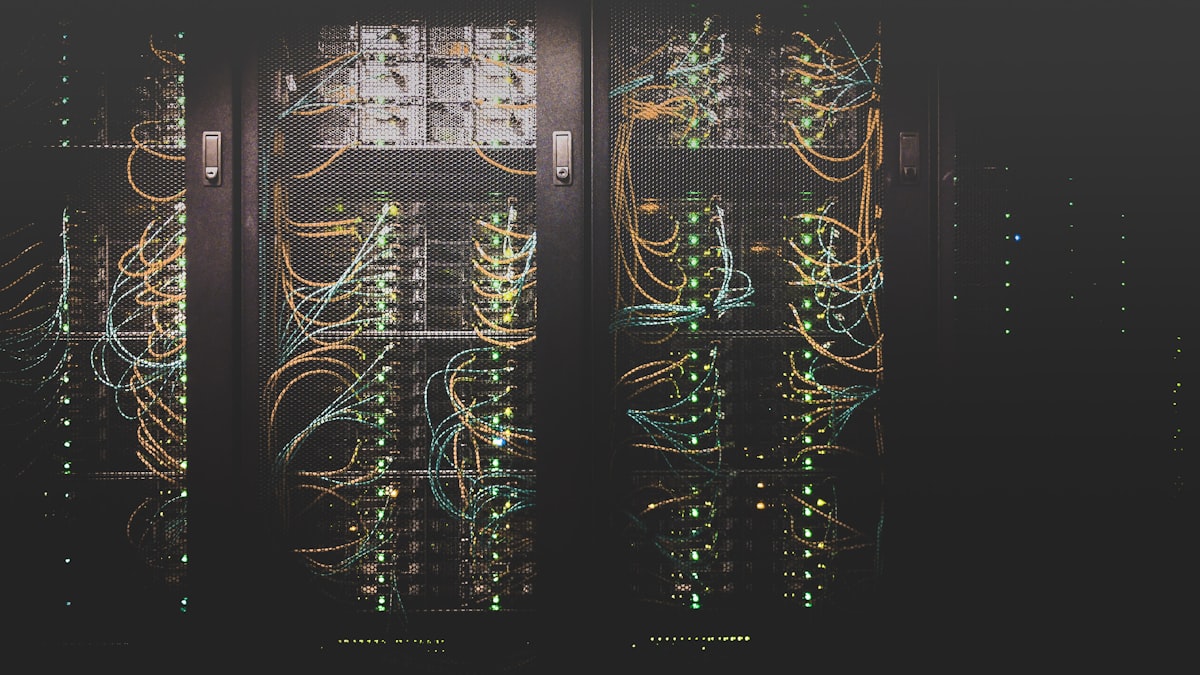
At the heart of OLIX's pitch is a rethink of how AI hardware is connected. Instead of relying on a single generalist chip, the company uses specialised silicon for different stages of a model and links it together with a high-speed optical network, moving data with light rather than conventional electronics. Executives describe the resulting design as a token factory.
This design is a direct challenge to Nvidia, whose graphics processors dominate the AI market. OLIX argues that by unrolling a model across a rack like an assembly line, and by using its X-1 platform to optimise each stage separately, it can squeeze out more performance and efficiency than a one-size-fits-all approach. The first systems are targeted to reach customers in the second half of 2027.
Who is backing it
The investor list reads like a who's who of the technology and finance world. The round drew in the chip designer Arm, the trading giant Hudson River Trading and Reed Hastings, the co-founder of Netflix, while the fund Fundomo led the deal. Existing backers, including Plural, Hummingbird Ventures, Phoenix Court, Crane, Creandum and Transition, all increased their commitments in this round.
Perhaps most striking is the presence of the state. The UK government's Sovereign AI venture fund also invested, a sign of how strategically important homegrown chip capability has become for Britain. For a country that has often watched its most promising deep-tech companies get acquired or move abroad, keeping OLIX growing on home soil is a political as well as an economic priority.
OLIX has also been building out a heavyweight leadership team. The company appointed Matt Briers, who spent nine years as chief financial officer of the British fintech Wise, as its new CFO. It also added Professor Nick McKeown, a Stanford professor emeritus and winner of the 2025 Marconi Prize, to its board, bringing decades of networking expertise to the young firm.
From startup to national champion
The company was founded in 2024 by James Dacombe, a 25-year-old Thiel Fellow who left school at 16. His deputies include Alex Worrall, a former engineering manager at Meta, and Julio Castañeda, who previously worked at the self-driving sensor company Luminar. Dacombe is also chief executive of CoMind, a brain-monitoring startup that raised $102 million last October.
For a firm barely two years old, OLIX already has an international footprint. It is hiring across London, Bristol, Austin, Toronto and San Francisco, spanning both sides of the Atlantic. That geographic spread reflects both the global race for scarce chip-design talent and the ambition to sell into the world's largest AI markets from the very outset.
The raise lands at a moment when British venture capital is being reshaped by artificial intelligence. AI companies have absorbed the lion's share of UK startup funding in 2026, and semiconductors have emerged as one of the most closely watched frontiers. OLIX has been described as one of the country's biggest bets in the sector, a rare British contender in a field long dominated by American and Asian giants.
The hard part, of course, still lies ahead. OLIX has yet to ship a product, and its first systems are not due until late 2027, in a market where Nvidia's lead is vast and rivals are multiplying. But with more than half a billion dollars raised in a single year, a state-backed investor base and a valuation of $3.3 billion, the young British company has bought itself a serious shot at proving the doubters wrong.